
October Chain-Law Checks for Fleets in Denver
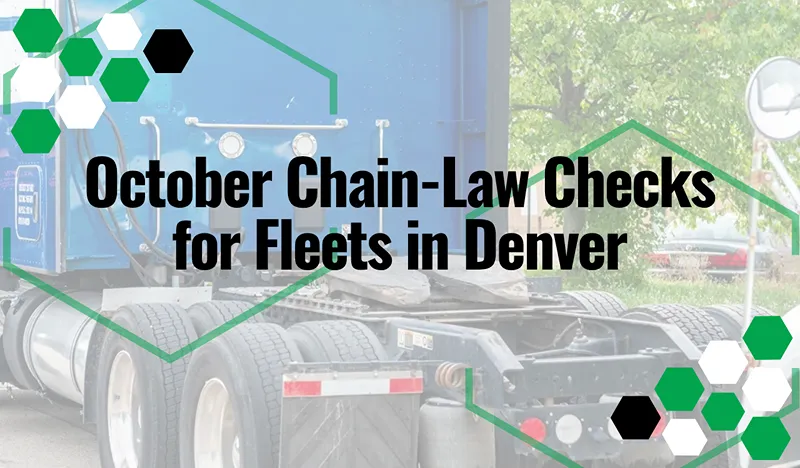
Your truck can pass its annual DOT inspection and still face enforcement trouble on Colorado's mountain highways. The Colorado State Patrol began proactive commercial vehicle chain checks at the Dumont Port of Entry on October 1, 2026. For Denver fleets, the issue is straightforward: annual mechanical inspections don't replace Colorado's separate traction-equipment requirements. Checking both before heading west on I-70 helps prevent violations, breakdowns, and costly delays.
What Does Colorado's October 2026 Chain-Law Enforcement Mean for Denver Fleets?
Colorado's 2026–27 chain-law season is already underway. The Colorado State Patrol announced proactive inspections at the Dumont Port of Entry, located at I-70 Exit 234, with rotating weekly checks and additional mobile enforcement operations throughout the season.
For fleets operating between Denver and mountain destinations, these inspections make Colorado commercial vehicle chain law compliance an immediate operational priority.
Where Do Colorado's Commercial Vehicle Chain Requirements Apply?
Colorado requires covered commercial vehicles to carry adequate chains or approved alternative traction devices on designated highways from September 1 through May 31, even when pavement is dry.
Under the expanded requirements established by Senate Bill 24-100, designated routes include:
- I-70 west of Morrison: A major freight corridor connecting Denver with Colorado's mountain regions.
- US 40 west of Empire: Another designated mountain route subject to seasonal requirements.
- US 285 west of Morrison: An important route for commercial vehicles travelling southwest.
- Other designated highways: Certain sections of Colorado highways 9, 50, 160, and US 550.
These requirements generally apply to commercial vehicles rated at 16,001 pounds or more, alongside other covered vehicle categories. Vehicle classification and route determine applicability; not every truck operating within Denver must carry chains throughout October.
Why Doesn't an Annual DOT Inspection Guarantee Chain-Law Compliance?
An annual DOT truck inspection evaluates whether a commercial vehicle meets applicable federal mechanical safety standards. Colorado's seasonal chain requirements address a different concern: whether the vehicle carries and uses the traction equipment required for designated highways.
Under 49 CFR §396.17, covered commercial vehicles must pass a periodic inspection at least once every 12 months. The requirement applies separately to tractors and trailers in vehicle combinations.
An annual DOT inspection and Colorado's chain-law requirements serve different purposes. Passing your annual inspection does not automatically mean your truck complies with Colorado's seasonal traction requirements.
Annual DOT Inspection
An annual DOT inspection focuses on the overall mechanical condition and safety of your commercial vehicle.
- Frequency: Required at least every 12 months.
- What's checked: Brakes, tires, steering, lighting, and other safety systems.
- Who performs it: A qualified inspector.
- Documentation: Records the vehicle's condition at the time of inspection.
- Vehicles covered: Applies to covered commercial tractors and trailers.
Colorado Chain-Law Compliance
Colorado's chain-law requirements focus on whether your commercial vehicle carries and uses appropriate traction equipment when required.
- Seasonal requirements: Carrying requirements apply from September through May on designated routes.
- What's checked: Required traction equipment and its proper use.
- Enforcement: Subject to roadside inspections and enforcement.
- Ongoing compliance: Requirements depend on current road conditions, restrictions, and routes.
- Vehicles covered: Depends on vehicle classification and designated routes.
The key difference: An annual DOT inspection confirms that your vehicle meets applicable safety standards at the time of inspection. Colorado's chain laws impose additional, ongoing traction requirements that you must follow when operating on affected routes.
A valid inspection sticker doesn't prove that your truck carries properly fitted chains. Likewise, having chains onboard doesn't excuse defective brakes, worn tires, or unsafe suspension components.
For fleet managers scheduling a commercial truck inspection in Denver, both requirements deserve attention before dispatch.
What Should Denver Fleets Check on Chains and Tires Before Entering I-70?
Chains and tires should top your October preparation checklist. Whether your truck is approaching Morrison or climbing toward Floyd Hill, inadequate traction equipment can turn changing mountain conditions into a serious problem.
How Do You Inspect Commercial Truck Chains?
Your DOT truck inspection checklist should include a separate seasonal traction-equipment review.
Before dispatching a mountain-bound truck:
- Confirm chain quantity: Carry enough chains or approved alternative devices for the vehicle's configuration and applicable requirements.
- Verify proper fitment: Match the equipment to the installed tire sizes and drive-axle arrangement.
- Inspect chain condition: Look for broken cross chains, damaged links, worn fasteners, and missing components.
- Check storage: Secure chains where drivers can retrieve them safely without unloading cargo.
- Review installation procedures: Ensure drivers understand when and how to install the equipment.
Carrying chains and installing them are separate obligations. Drivers must deploy the required equipment when an applicable chain restriction becomes active, not simply whenever temperatures fall below freezing.
Why Does Tire Condition Matter During Chain Season?
Chains cannot compensate for every tire defect. A commercial truck tire inspection should identify inadequate tread depth, sidewall damage, embedded objects, irregular wear, and inflation problems.
Cold temperatures can lower tire pressure, while worn tread reduces available traction on wet or snowy pavement. Check pressures against manufacturer specifications when tires are cold, and replace tires that fail applicable safety standards.
Why Are Air Brake Inspections Important Before Mountain Freight Trips?
Steep grades demand reliable braking performance. A truck with developing air-system defects may operate normally around Denver but become a liability during extended mountain descents.
A comprehensive air brake system inspection should examine:
- Air lines, hoses, and fittings for damage or leakage.
- Brake chambers for deterioration and defects.
- Slack adjusters and pushrod travel where applicable.
- Brake shoes, drums, rotors, and other foundation brake components.
- Air dryers and moisture-management systems.
Moisture deserves particular attention as temperatures drop. A malfunctioning air dryer can allow water to accumulate in the air system, increasing the risk of freezing and restricting airflow.
Even after a passing semi-truck DOT inspection, drivers should monitor air-pressure behaviour and report developing brake problems immediately. Never dispatch a truck with a known brake defect that compromises safe operation.
What Steering, Suspension, and Lighting Problems Should Fleets Catch?
Mountain driving involves grades, curves, changing road surfaces, and reduced visibility. That makes heavy-duty truck preventive maintenance especially valuable before October freight runs.
Steering and Suspension Components
Inspect steering linkages, tie rods, loose connections, damaged leaf springs, air suspension components, and shock absorbers.
Worn suspension components can reduce vehicle stability and contribute to uneven tire wear. Steering problems also become particularly concerning when drivers need precise control on winding mountain roads.
Lighting, Electrical Systems, and Trailer Connections
Shorter daylight hours and early mountain snowstorms make dependable lighting essential.
Check headlights, brake lights, turn signals, marker lights, wiring harnesses, and electrical connectors. Your DOT trailer inspection should also verify trailer lighting, brake connections, coupling components, and other safety-critical equipment.
A loose electrical connection might cause intermittent trailer lights, creating avoidable visibility and compliance problems during poor weather.
How Can Denver Fleet Managers Prepare for October Chain Enforcement?
The most effective approach combines annual inspections with routine mechanical checks and route-specific preparation.
Schedule your DOT inspection Denver, CO service before the inspection deadline, but don't rely on the annual appointment to catch every developing defect. A structured maintenance schedule helps fleets address problems between inspections.
Before assigning a truck to I-70, confirm its inspection documentation, review outstanding repair reports, and verify its traction equipment.
Drivers should also consult COtrip for current highway restrictions. Conditions around Denver can differ significantly from those at higher elevations, making real-time information essential.
Finally, drivers should report mechanical concerns promptly. Fixing an air leak, replacing a damaged tire, or repairing faulty lighting before departure is far more manageable than dealing with a breakdown on a mountain grade.
Schedule Your Denver DOT Inspection Before Your Next Mountain Run
Colorado's October enforcement highlights an important distinction: passing an annual inspection and preparing for mountain operations require separate checks.
At Schroeder Truck Repair, we help Denver-area commercial operators address their truck inspection and mechanical maintenance needs. Before your next mountain-bound trip, call us at 303-227-1057 to discuss your annual DOT truck inspection and vehicle readiness.
Frequently Asked Questions
Does an Annual DOT Inspection Cover Colorado's Chain-Law Requirements?
No. An annual DOT inspection evaluates specified mechanical safety components under federal regulations. Colorado's chain laws separately require covered commercial vehicles to carry and use appropriate traction equipment on designated highways.
When Must Commercial Trucks Carry Chains in Colorado?
Covered commercial vehicles must carry sufficient chains or approved alternative traction devices from September 1 through May 31 on designated Colorado mountain highways, including I-70 west of Morrison.
Can Colorado State Patrol Inspect Chains When the Roads Are Dry?
Yes. The seasonal carrying requirement applies regardless of current weather on designated routes. Drivers must install chains or approved alternatives when applicable restrictions require their use.
Do Commercial Truck Trailers Need Separate Annual DOT Inspections?
Yes. Federal periodic inspection requirements apply individually to covered tractors and trailers. Each vehicle in a qualifying combination must satisfy the applicable inspection requirements.
How Often Should Denver Fleets Check Brakes and Tires?
Covered vehicles require a qualifying periodic inspection at least every 12 months. However, drivers and fleets must also conduct applicable routine inspections and maintenance checks, addressing unsafe brake or tire conditions before continuing operations.
Need a Truck Repair Quote?
Visit us in person or get in touch. We're open Monday to Friday, 7AM-5PM. Or click here to schedule a service.